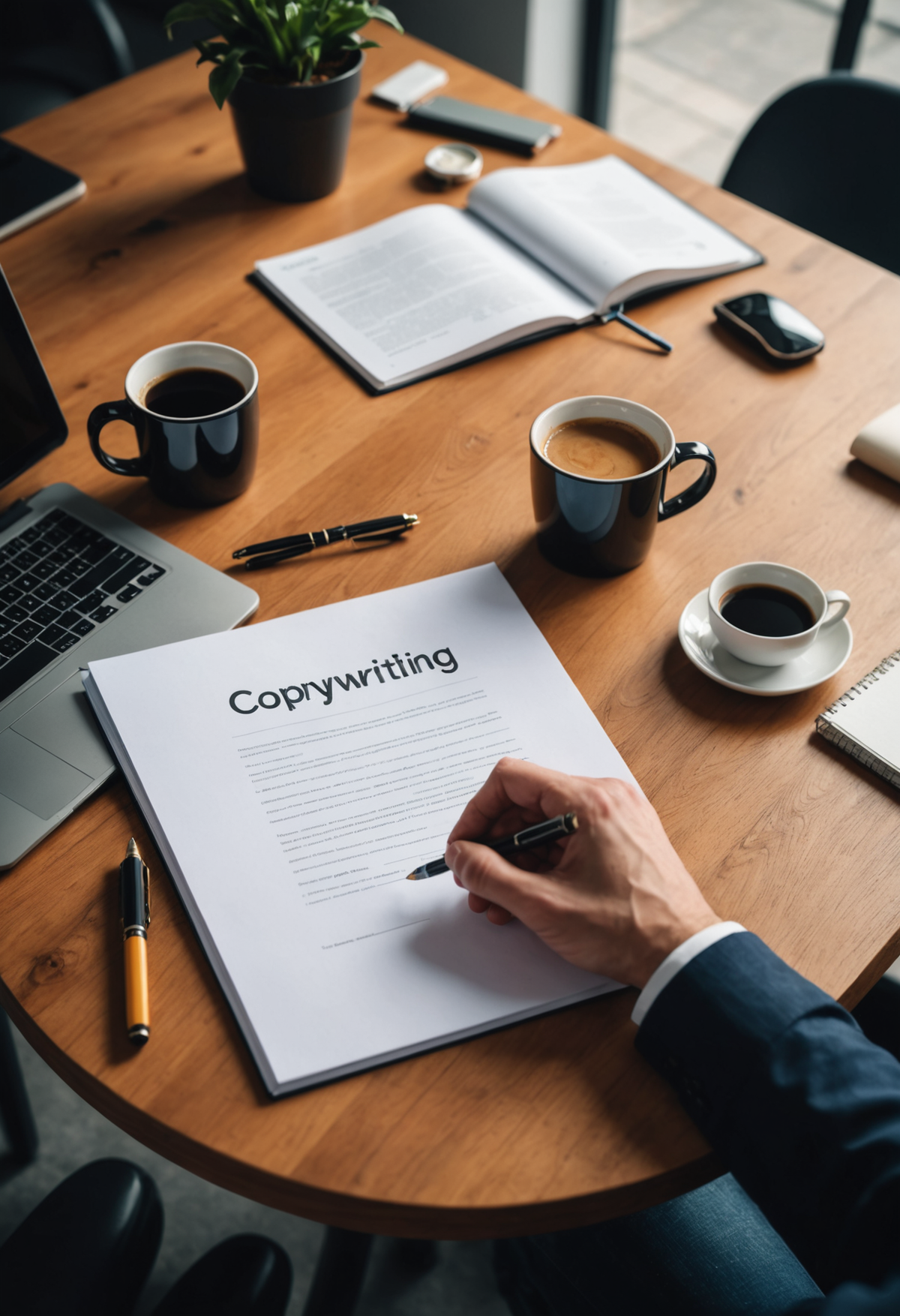
Copywriting
Copywriting gigs from Buxonline freelancers, starting at $1.

 saadhunny2414New Seller
I will do fast and accurate typing, data entry, copy paste, PDF to Word and Excel data entry.
$100
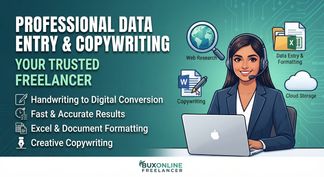 buddhimadewmini822New Seller
Up to 2.5 hours of high-quality data entry, Excel, document formatting , creative copywriting, and accurate handwritten to digital document conversion (Word, google slides & ect... )
$100
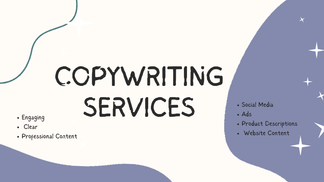 mahweenali456New Seller
Need words that grab attention and communicate your message clearly? I provide professional copywriting services designed to make your content clear, engaging, and appealing to your target audience. Whether you need content for a business, product, social media, advertisement, website, or promotional material, I will create original copy based on your requirements. You can expect: • Engaging and audience-friendly writing • Clear and persuasive messaging • Original, well-structured content • Professional tone and readability • Content tailored to your specific needs Let’s turn your ideas into compelling words that connect with your audience and make your message stand out.
$100
About copywriting
Copywriting is the craft of writing text designed to prompt a specific response from the reader. Unlike journalism or creative writing, copy exists to persuade, inform or guide someone toward an action: clicking a button, remembering a brand, filling in a form, or simply feeling differently about a product or idea. It appears in advertisements, websites, emails, product descriptions, social media posts, brochures, video scripts and direct mail.
Good copywriting speaks directly to the reader's needs, using language that feels natural to them while serving a clear purpose. It balances clarity with personality, avoids jargon unless the audience expects it, and respects the medium it lives in—a billboard demands brevity, while a landing page can afford to explain. Poor copy meanders, buries the point, or sounds like it was written for everyone and no one at the same time.
The work involves research into the audience, the product and the context, then drafting and refining until the message lands cleanly. A copywriter might write fifteen headlines to find one that works, test different openings, or cut a paragraph down to a single sentence. The goal is always to make the reader's decision easier, not to show off clever language for its own sake.
Guides related to copywriting
Copywriting — questions and answers
- What's the difference between long-form and short-form copy?
- Short-form copy includes headlines, taglines, social media posts, product names and email subject lines—usually under a hundred words. Long-form runs to several hundred or thousand words: landing pages, sales letters, case studies, white papers. Long-form explains and persuades in detail; short-form grabs attention or delivers a message fast. Different skills apply to each.
- How do you write a call to action that actually gets clicked?
- A strong call to action tells the reader exactly what happens next, uses active verbs, and removes uncertainty. "Download the guide" works better than "Learn more" because it's concrete. Placement matters too—people need to see it after they're convinced, not before. Avoid vague phrases like "Click here" that give no reason to act.
- Does copy written for print work on a website, or does it need rewriting?
- Print copy often needs adapting. Readers scan screens differently, so web copy uses shorter paragraphs, subheadings and bulleted lists. Sentences can be punchier. Print allows for longer, uninterrupted reading. A brochure paragraph might become three separate blocks online. The core message can stay the same, but structure and rhythm usually shift.
- What does it mean to write in brand voice, and how is that decided?
- Brand voice is the consistent personality that comes through in all copy: formal or casual, witty or straightforward, technical or approachable. It's usually defined in a brand guidelines document that lists tone attributes, preferred vocabulary, and examples. A copywriter adapts their style to match that voice, so every piece sounds like it comes from the same organisation.
- Can you write effective copy without knowing the product inside out?
- Not reliably. Copywriters spend time learning how a product works, who uses it, what problem it solves and what makes it different from alternatives. That research shapes every sentence. Writing without it leads to generic claims and missed opportunities to address real objections or highlight genuine benefits. Depth of understanding shows in the specifics.
- What's a headline formula, and do copywriters actually use them?
- Headline formulas are templates like "How to [achieve goal] without [common obstacle]" or "[Number] ways to [benefit]". Many copywriters use them as starting points because they work—they promise value clearly. But formulaic doesn't mean lazy; the skill lies in filling the template with something true and specific, then often rewriting it entirely once the idea is clear.


