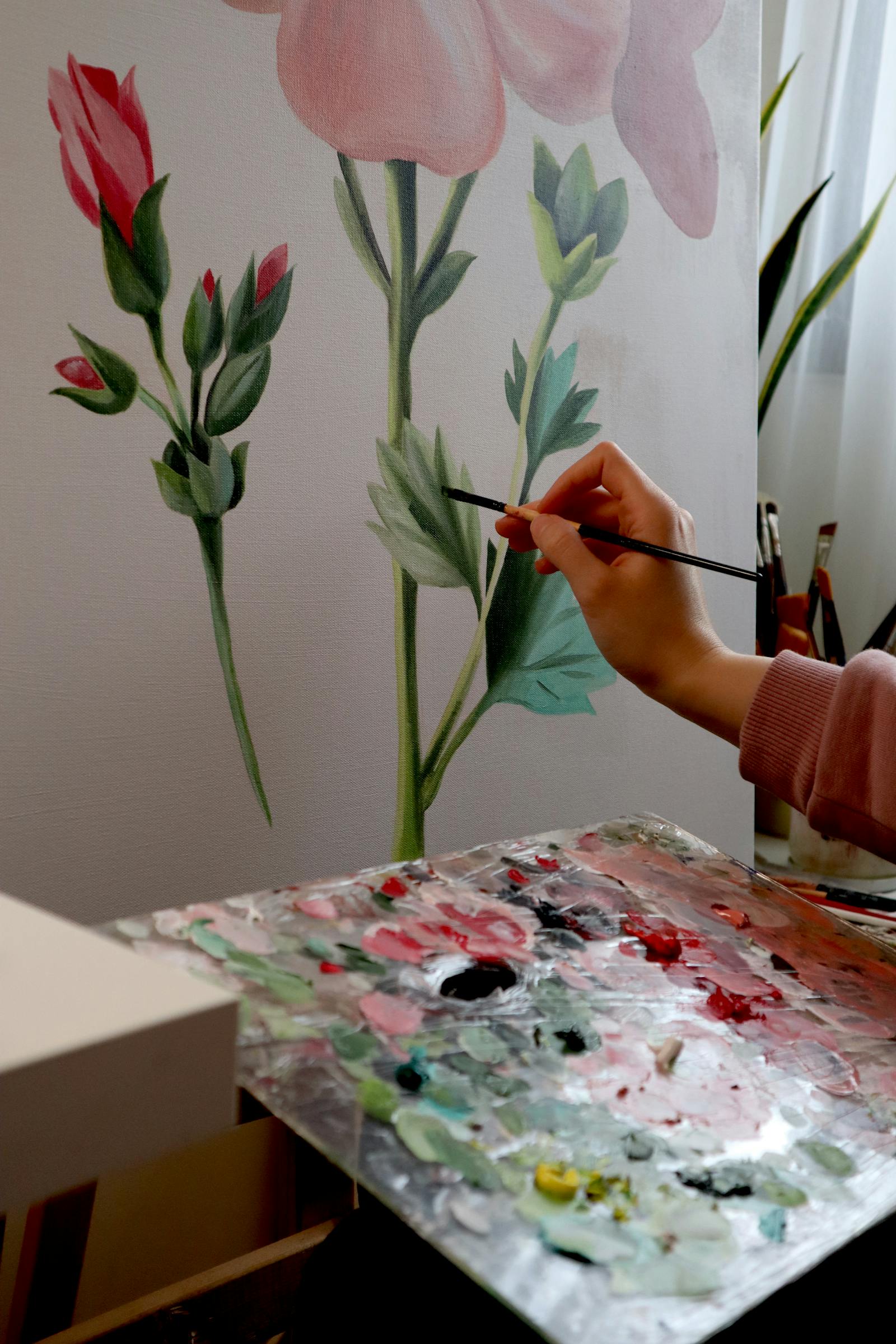
Illustration
Custom illustrations and artwork from Buxonline artists — bring your ideas to life from $1.
 sadbinrizwanNew Seller
I will provide expert interior design consultation, including space planning, colour schemes, layout concepts, and furniture selection to transform your home or office space.
$100
 MamunNew Seller
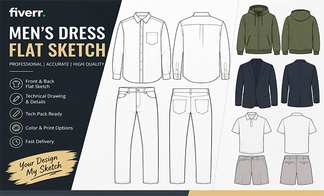
Basic style flat sketch no model one design no color front and back view black and white no details
$100
 badar usmanNew Seller
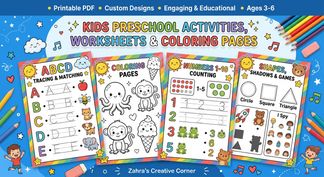
I design custom, print-ready preschool worksheets, activity books, and coloring pages for schools, academies, and teachers. All designs can be fully customised with your school logo, name, and specific syllabus requirements (including tracing, matching, picture description, and simple math). High-resolution (300 DPI) PDF/PNG files delivered quickly!
$100
About illustration
Illustration is the creation of visual images to communicate ideas, accompany text, or stand alone as expressive work. Unlike photography, which captures what exists, illustration constructs imagery from imagination, reference, and intention. It appears in children's books, editorial magazines, advertising campaigns, packaging, video games, technical manuals, medical textbooks, and countless other contexts where a drawn, painted, or digitally created image serves a purpose.
The work involves translating a brief or concept into visual form, making choices about composition, colour, style, and detail that serve the intended message and audience. An illustrator might work in watercolour, vector software like Adobe Illustrator, digital painting tools such as Procreate or Photoshop, or traditional pen and ink. Each medium offers different qualities: vectors scale infinitely and suit clean, graphic work; raster painting captures texture and atmospheric effects; physical media bring tactile richness that scanning preserves.
Doing this well means understanding not just how to draw, but how images function in context. A book illustration must leave room for text and guide the reader's eye across a spread. A spot illustration for a magazine needs to read clearly at small sizes. Character design for animation requires consistency across angles and expressions. Technical illustration demands accuracy and clarity over artistic flourish. Poor illustration misjudges its audience, obscures rather than clarifies, or applies a style that fights the content. Strong work feels inevitable, as though no other image could have served as well.
Guides related to illustration
- Graphic design services from $1
- Logo design services from $1
- Become a Seller: start earning from $1
- Freelance jobs for beginners: start with no experience
- Freelance websites compared: what beginners should check
- Gig work for beginners: what it is and how to start
- Graphic design jobs you can do from home
- Micro jobs from $1 — start earning today
Illustration — questions and answers
- What's the difference between raster and vector illustration, and when does each matter?
- Raster illustration uses pixels, created in software like Photoshop or Procreate, and excels at painterly effects, texture, and complex colour blending. Vector illustration uses mathematical paths in tools like Adobe Illustrator, scaling to any size without quality loss, which suits logos, icons, and work requiring crisp edges. Raster works best for atmospheric, detailed imagery; vector for clean, scalable graphics that need to function across sizes.
- How do illustrators handle revisions when working in traditional media?
- Traditional media like watercolour, gouache, or ink cannot be undone easily, so illustrators often work in stages: rough sketches for approval, then tighter pencil drawings before committing to final media. Major changes after completion may require repainting sections or starting over. Many scan work at high resolution and make minor adjustments digitally, though this depends on the project and the illustrator's process.
- What resolution should illustrations be created at for print?
- Print illustration typically requires 300 dots per inch at the final reproduction size. A full-page magazine illustration might be created at 3000 by 4000 pixels or larger. Working at higher resolution than needed provides flexibility for cropping and resizing. Illustrations for large-format printing, like posters or billboards, may use lower DPI because viewing distance increases, but file dimensions remain substantial.
- Can one illustration style work across editorial, advertising, and packaging?
- A style can translate across contexts, but effectiveness depends on how well it serves each medium's demands. Editorial illustration often embraces complexity and conceptual depth; advertising needs immediate visual impact and brand alignment; packaging must function at small sizes and compete on shelves. An illustrator may adapt their approach—simplifying detail, adjusting colour intensity, or changing composition—while maintaining a recognisable aesthetic.
- Why do publishers request separate files for covers versus interiors?
- Cover illustrations face different technical requirements: they wrap around spines, need bleed for trimming, and often require higher resolution because they are scrutinised closely and reproduced in marketing materials. Interior illustrations may be smaller, black-and-white, or have different colour specifications. Separating files allows printers to handle each according to its specific production needs, and lets publishers repurpose cover art independently.
- What does 'spot illustration' mean and how does it differ from full-page work?
- Spot illustrations are small, standalone images used to break up text, mark section openings, or add visual interest without dominating the page. They are typically simpler, with clear silhouettes and minimal detail, designed to read instantly at small sizes. Full-page or full-bleed illustrations carry more narrative weight, allow for complexity, and often anchor the layout, whereas spot illustrations serve as accents within a text-heavy design.


