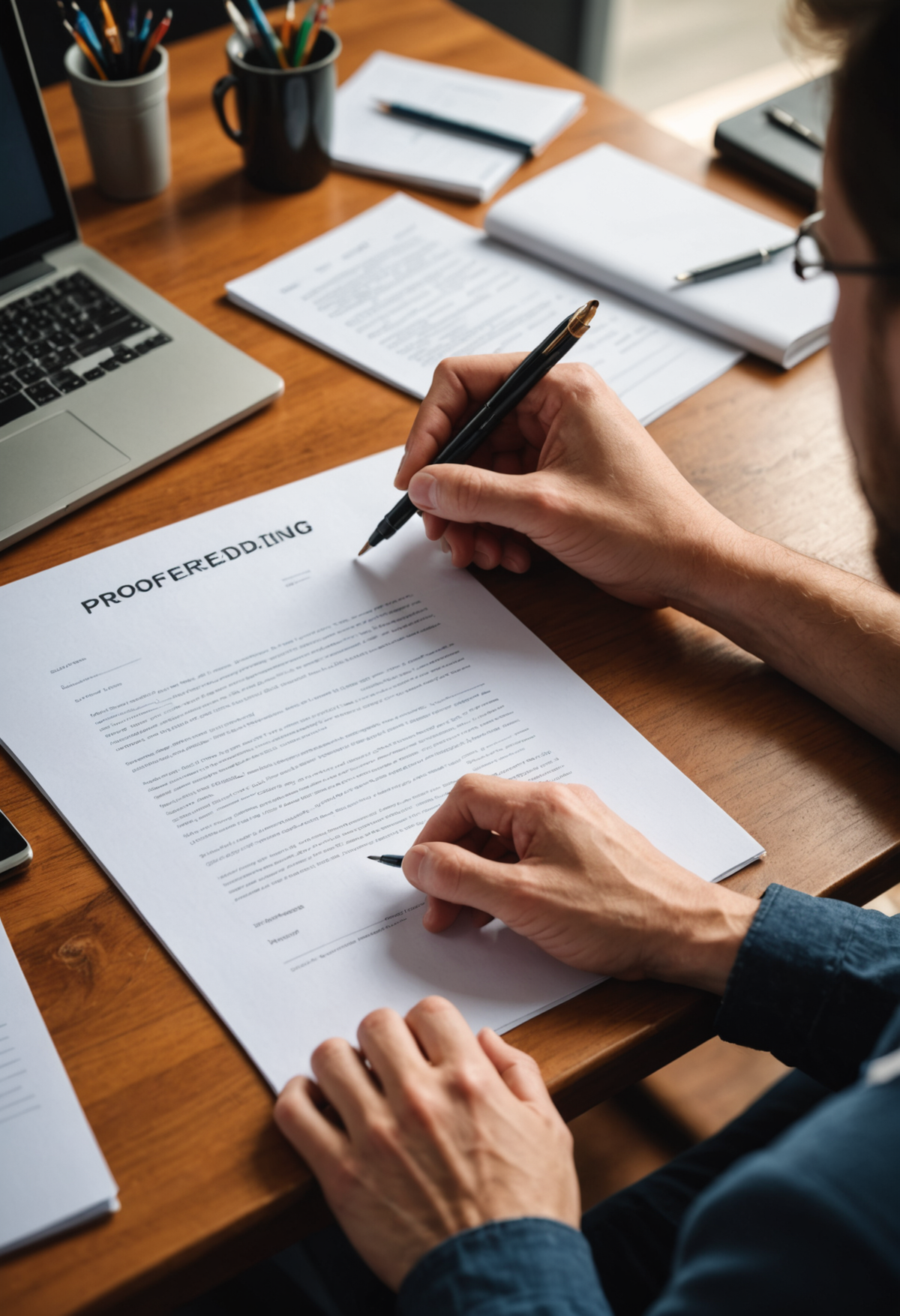
Proofreading & Editing
Proofreading & Editing gigs from Buxonline freelancers, starting at $1.
 redpenrubyLevel 3
I'll catch grammar, spelling and punctuation errors in your text and mark them in Google Docs.
 4
4$100
 redpenrubyLevel 3
I'll check your newsletter draft for errors and awkward phrasing before it goes to subscribers.
5$300

About proofreading & editing
Proofreading and editing are separate stages in refining written material before it reaches its audience. Proofreading is the final check for surface errors: typos, misspellings, punctuation mistakes, inconsistent capitalisation, and formatting glitches. It assumes the text is otherwise complete. Editing goes deeper, working on structure, clarity, tone, grammar, and sometimes factual accuracy. A developmental editor might reshape entire sections or question whether an argument holds together, while a copy editor tightens sentences, fixes ambiguities, and enforces house style. Line editing focuses on flow and readability at the sentence level.
The distinction matters because each type of intervention requires different skills and happens at different points in a project. Running a proofread on a draft that still needs structural work wastes time; doing a heavy edit when only typos need catching introduces unnecessary risk. Good proofreading is invisible—the reader never notices it happened. Good editing preserves the author's voice while making the text do its job better, whether that job is persuading, informing, entertaining, or instructing. Poor editing homogenises voice or inserts errors while fixing others; poor proofreading lets through inconsistencies that undermine credibility, like switching between British and American spelling or leaving tracked changes visible in a published document.
Guides related to proofreading & editing
Proofreading & Editing — questions and answers
- What's the difference between proofreading and copy editing?
- Proofreading catches surface errors—typos, spacing issues, punctuation mistakes—in text that's otherwise finished. Copy editing addresses grammar, clarity, consistency, tone, and factual checking. Copy editors rewrite clumsy sentences and query unclear passages; proofreaders mark errors but don't rewrite. Copy editing happens earlier in the production cycle, proofreading last.
- Should edits be made in Track Changes or directly in the document?
- Track Changes (or equivalent tools like Google Docs suggestion mode) lets the author see every alteration and accept or reject each one. Direct editing is faster but removes that visibility. Light proofreading often uses direct edits with a summary note; substantive editing nearly always uses tracked changes so the author understands what shifted and why.
- How do you handle British versus American English when proofreading?
- Choose one standard and apply it throughout unless the text deliberately mixes them for effect. This covers spelling (colour/color), punctuation (single versus double quotation marks), vocabulary (lorry/truck), and date formats. A style sheet recording decisions—especially for terms that appear frequently—prevents inconsistency. Mixed usage within one document looks careless.
- Can you edit something outside your subject area, or do you need specialist knowledge?
- General editors handle structure, clarity, grammar, and readability across most topics. Technical or specialist texts—medical journals, legal documents, scientific papers—often need editors familiar with the terminology, conventions, and standards of that field. A generalist might query unclear passages but miss a misused technical term that changes meaning entirely.
- What does it mean to edit for house style, and where does that style come from?
- House style is an organisation's set of preferences: whether to use the Oxford comma, how to format numbers and dates, which spelling standard to follow, how to capitalise headings. Publishers, corporations, and journals maintain style guides so all their output looks consistent. Editors apply these rules throughout a document, overriding the author's personal preferences.
- Why do proofreaders mark up PDFs differently than Word documents?
- PDFs are often final layouts where changes affect pagination, so proofreaders use annotation tools or traditional proofreading marks to flag errors for a designer to fix. Word documents allow direct editing or tracked changes. The format determines how corrections are communicated—PDFs need precise location markers because text can't simply be retyped without affecting design.


